
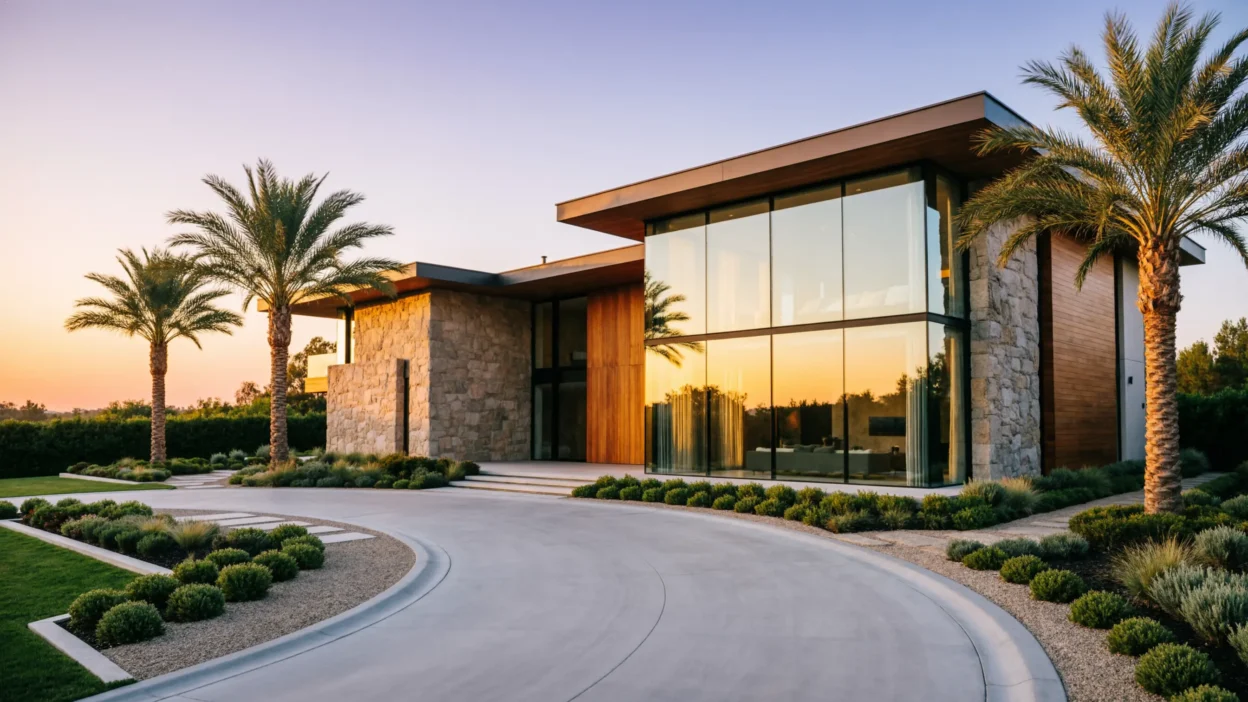
Designing a home’s exterior used to require hours of sketching, 3D modeling, and expensive architectural visualization software. Today, AI house exterior design tools can generate stunning architectural concepts in seconds.
Upload a photo of a house. Add a simple prompt. The system produces a realistic redesign of the facade.
That simple workflow explains why architects, homeowners, and real-estate professionals now rely on AI exterior design generators to explore renovation ideas and visualize building concepts faster than ever.
Modern AI tools combine image generation models, architectural rendering engines, and prompt-based editing. The result is an interactive design assistant capable of producing photorealistic architectural rendering, testing different facade materials, and generating endless exterior design variations.
This guide explores everything you need to know about AI home exterior design, including how these tools work, how to use them effectively, and how they are reshaping architectural workflows.
What Is AI House Exterior Design?
AI house exterior design refers to the use of artificial intelligence to generate, visualize, and refine building exteriors.
Instead of manually modeling architecture, AI analyzes an input image or sketch and produces realistic facade designs automatically.
These systems combine:
- Artificial intelligence image generation
- Neural rendering models
- Architectural visualization algorithms
The result is a system capable of generating architectural concept rendering from a simple prompt.
How AI Exterior Design Works
Most AI exterior design generators follow a simple workflow:
- Upload a house photo, sketch, or 3D screenshot
- Enter a design prompt describing the style
- Choose materials and architectural elements
- Generate a photorealistic exterior render
The AI analyzes the building structure and then generates new facade concepts.
For example, a user could upload a house photo and prompt:
Within seconds, the tool produces multiple exterior architecture visualization options.
Key Technologies Behind AI Exterior Design
Modern systems rely on several technologies working together:
| Technology | Function |
|---|---|
| AI Rendering Engine | Converts prompts into realistic visuals |
| Prompt Interpretation | Understands architectural language |
| Sketch Interpretation | Converts hand drawings into renders |
| Material Visualization Models | Simulate brick, wood, stone, or glass |
| AI Design Automation | Generates design variations automatically |
These technologies allow tools to function as a virtual AI architecture assistant.
What an AI Exterior Design Generator Can Do
An advanced AI exterior design generator performs several architectural visualization tasks.
Generate Photorealistic Exterior Renders
Modern AI rendering engines produce stunning visuals that rival professional architectural software.
They simulate:
- Daylight rendering
- Golden hour lighting
- Twilight lighting
- Exterior lighting design
These lighting conditions enhance the realism of exterior architectural rendering.
Visualize Exterior Renovation Ideas
One of the most valuable capabilities is facade renovation visualization.
Instead of guessing how a renovation will look, you can preview it instantly.
Examples include:
- Changing brick facade to stone cladding
- Replacing stucco walls with wood cladding
- Adding glass curtain walls
- Updating rooflines and balconies
This process helps homeowners evaluate exterior renovation ideas before construction begins.
Create Multiple Architectural Design Variations
AI tools can generate dozens of facade concepts quickly.
For example:
- Modern minimalist design
- Mediterranean villa facade
- Industrial architectural style
- Scandinavian modern home
Each variation represents a different architectural concept design.
Produce Client-Ready Architectural Presentation Visuals
Architects frequently use AI-generated renders for presentations.
These visuals include:
- High-resolution render outputs
- Camera angle adjustments
- Architectural lighting simulation
- Texture rendering
The results often resemble professional architectural presentation visuals.
Key Features of the Best AI Exterior Design Tools
The most powerful tools combine multiple architectural visualization features.
| Feature | Purpose |
|---|---|
| Photo to Exterior Render | Convert house photos into new designs |
| Sketch to Exterior Design | Turn drawings into realistic architecture |
| AI Facade Generator | Create facade concepts instantly |
| Architectural Material Rendering | Test different materials and textures |
| Lighting Simulation | Simulate daylight or evening lighting |
| Design Variation Generator | Explore multiple architectural styles |
| High-Resolution Rendering | Produce professional design visuals |
These features make AI architectural visualization tools extremely versatile.
How to Use an AI Exterior Design Generator
Using an AI house exterior design generator is surprisingly simple.
Upload a House Photo or Sketch
Most tools allow multiple input formats:
- House photos
- Hand-drawn sketches
- 3D model screenshots
Uploading a clear image improves the accuracy of building facade visualization.
Choose an Architectural Style
The next step involves selecting a style.
Popular options include:
- Minimalist Modernism
- Mediterranean Villa
- Scandinavian Modern
- Industrial Architecture
- Contemporary Coastal
Each style influences the final architectural style rendering.
Add a Design Prompt
A design prompt describes the facade concept.
Example prompts:
- “Modern house facade with glass curtain walls and wood accents”
- “Classic Mediterranean villa with stone exterior and terracotta roof”
- “Minimalist concrete structure with large panoramic windows”
The AI processes the natural language prompt and converts it into a design.
Select Materials and Textures
Most AI tools allow detailed material selection.
Common materials include:
- Brick facade
- Stone cladding
- Timber slats
- Concrete structure
- Metal frames
- Glass curtain walls
These materials influence the final material visualization.
Generate the Exterior Render
Once the settings are chosen, the system generates a render.
The result typically includes:
- Photorealistic architectural rendering
- Detailed textures
- Realistic lighting
- Accurate building proportions
Refine and Generate Variations
If the first result isn’t perfect, you can refine the prompt.
For example:
- Add landscaping
- Adjust lighting conditions
- Modify facade materials
This process enables continuous design concept visualization.
Real-World Applications of AI House Exterior Design
AI exterior design tools serve multiple industries.
Homeowners Planning Exterior Renovations
Homeowners often struggle to visualize renovations.
AI solves this problem by generating realistic previews of:
- New siding materials
- Window styles
- Roofing designs
- Landscaping layouts
This helps avoid expensive design mistakes.
Architects and Architecture Firms
Architects use AI architectural rendering generators to accelerate early concept design.
Benefits include:
- Faster design exploration
- Quick architectural concept rendering
- Improved client presentations
Instead of building complex 3D models, architects can generate ideas instantly.
Real Estate Agents
Real estate professionals use AI visualization for property marketing.
Examples include:
- Building exterior makeover previews
- Facade redesign concepts
- Property renovation marketing visuals
These images help buyers imagine a property’s potential.
Architecture Students
Students often rely on AI tools for:
- Learning facade design concepts
- Exploring architectural styles
- Creating presentation visuals
The technology acts as a digital architecture ideation tool.
Popular Architectural Styles You Can Generate with AI
AI design tools can replicate nearly every architectural style.
| Style | Characteristics |
|---|---|
| Minimalist Modernism | Clean lines and large glass surfaces |
| Mediterranean Villa | Stucco walls and terracotta roofs |
| Scandinavian Modern | Light wood textures and minimal forms |
| Industrial Architecture | Steel structures and exposed materials |
| Contemporary Coastal | Bright facades with large windows |
| Neo Futurism | Curved geometry and futuristic materials |
These styles demonstrate the flexibility of AI architecture design tools.
AI Exterior Design From Photo vs Sketch
Different inputs produce different types of results.
| Input Type | Best Use Case | Result Type |
|---|---|---|
| Photo Input | Renovation projects | Highly realistic renders |
| Sketch Input | Concept exploration | Creative architectural ideas |
| 3D Screenshot | Professional workflows | Accurate design interpretation |
Each input method plays a role in AI architectural visualization.
Advantages of AI Exterior Design Tools
AI-powered design offers several advantages compared to traditional workflows.
Faster Architectural Visualization
Traditional architectural rendering may take hours.
AI produces results in seconds.
Lower Design Costs
Architectural visualization often requires specialized software.
AI tools reduce the cost dramatically.
Unlimited Design Variations
AI can generate dozens of facade transformation visualization concepts instantly.
Better Client Communication
Photorealistic renders help clients understand design proposals clearly.
Limitations of AI Exterior Design Generators
Despite their power, AI design tools have limitations.
Structural Engineering Validation Required
AI tools focus on visualization.
Architects still need to verify structural feasibility.
Complex Sites Can Confuse AI
Buildings with unusual geometry or complex site conditions may produce inaccurate results.
AI May Misinterpret Prompts
Occasionally, the system generates unexpected design elements.
Construction Documents Still Required
Final architectural drawings must be produced separately.
Traditional Rendering vs AI Rendering
AI tools significantly improve the efficiency of architectural visualization.
| Factor | Traditional Rendering | AI Rendering |
|---|---|---|
| Speed | Hours or days | Seconds |
| Cost | Expensive | Affordable |
| Iterations | Limited | Unlimited |
| Skill Requirement | Professional expertise | Beginner friendly |
These improvements explain the growing adoption of AI exterior rendering software.
Tips for Getting the Best AI Exterior Design Results
Using an AI design tool effectively requires a few strategies.
Use Clear Architectural Prompts
Describe the design precisely.
Upload High-Quality Images
Clear images improve the accuracy of building facade visualization.
Specify Materials and Textures
Include details like:
- Stone facade
- Timber accents
- Glass panels
Experiment With Lighting Conditions
Lighting dramatically affects the final render.
Try:
- Daylight
- Sunset
- Evening lighting
Generate Multiple Design Variations
Don’t rely on the first render.
Explore several design variations before selecting a final concept.
Future of AI in Exterior Architecture Design
AI will continue transforming architecture in the coming years.
AI-Assisted Architecture Workflows
Architects will increasingly rely on AI architecture assistants to generate early design concepts.
Generative Architecture
Future tools will create entire buildings automatically using AI architecture concept generators.
These systems may optimize:
- Building massing
- Energy efficiency
- Material selection
Integration With 3D Modeling Software
AI tools are beginning to integrate with BIM and modeling platforms.
Examples include:
- AI + BIM workflows
- Automated architectural visualization software
- Real-time design rendering
This integration will redefine the architecture design process.
FAQs
What is the best AI exterior design generator?
The best tools combine AI facade generators, material visualization, lighting simulation, and photorealistic rendering capabilities.
Can AI redesign my house exterior from a photo?
Yes. Many tools support AI exterior design generator from photo workflows.
You upload a house image, then the AI produces facade redesign options.
Are AI exterior renders accurate for construction?
AI renders serve as conceptual visualization.
Architects still need to produce construction drawings and structural plans.
Can AI generate architectural styles automatically?
Yes. Modern AI tools can create designs across many styles including modernism, Mediterranean architecture, Scandinavian design, and industrial architecture.
Conclusion
AI house exterior design represents a major shift in architectural visualization.
Instead of relying solely on manual modeling, designers and homeowners can now generate detailed exterior concepts instantly.
These tools combine artificial intelligence image generation, architectural rendering engines, and prompt-based editing to produce realistic building designs.
The result is a faster, more accessible design workflow that enables anyone to explore facade design concepts, exterior renovation ideas, and architectural visualization without complex software.
As AI continues to evolve, these systems will become even more powerful. Future tools will integrate with professional architectural workflows and generate entire building designs automatically.
For architects, homeowners, and designers, the era of AI exterior architecture design has only just begun.
Discover More Post
- The Future of Science AI Solvers Just For You?
- Smart AI Voice That Talks, Listens, and Understands(2026)
- AI Marketing Services: Next-Level Marketing with AI Tools(2026)

Elizabeth Gilbert is a celebrated American author known for exploring self-discovery, spirituality, and life’s deeper meanings. Her writings inspire readers to uncover the hidden messages in dreams, symbols, and personal journeys—perfectly aligning with the mission of DreamMaening.com.