The entertainment industry is entering a fascinating new era. For decades, animated films and video games evolved along separate paths. Movies told fixed stories while games offered player-driven experiences. Today, artificial intelligence is beginning to merge those worlds.
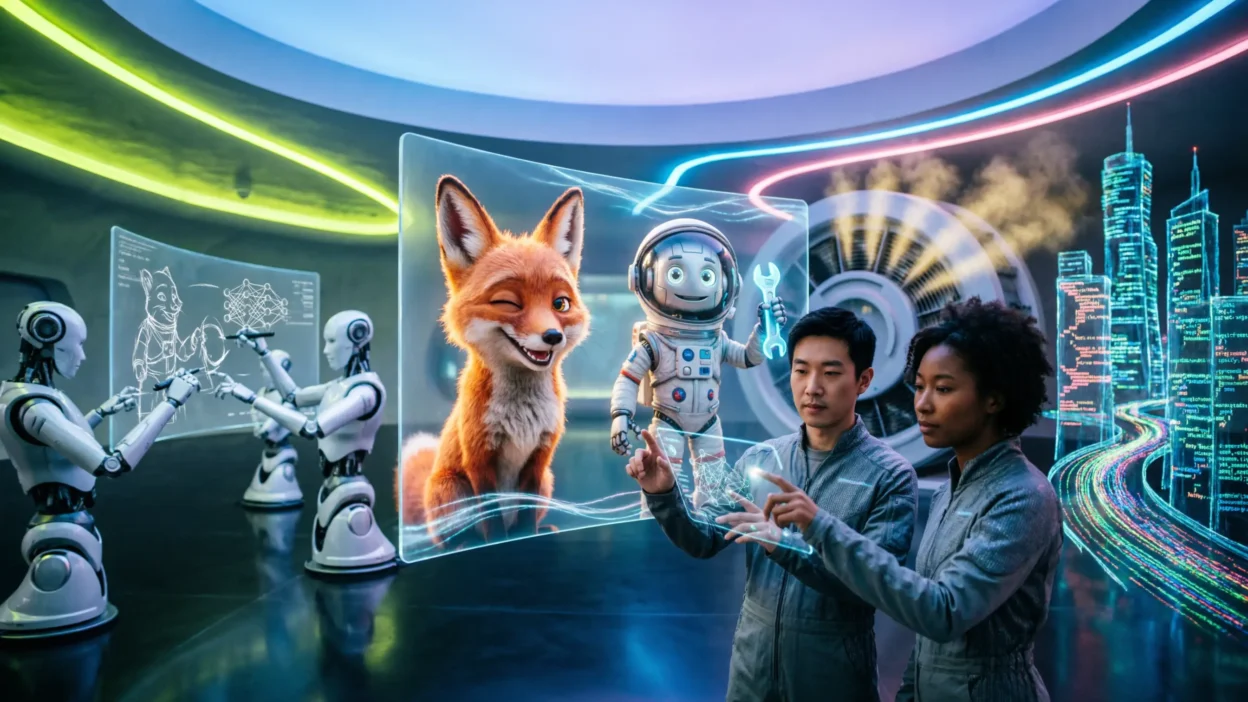
The idea often described as “AI Pixar” represents a future where AI-powered storytelling, real-time video generation, and interactive gameplay blend into one seamless experience.
Imagine watching a film that adapts to your choices or playing a game that generates cinematic scenes on the fly. That vision is quickly becoming possible thanks to advances in generative AI storytelling, neural network video generation, and multimodal AI systems.
Companies like Pixar once revolutionized animation through computer graphics. Now innovators across the tech industry are pushing storytelling even further.
AI tools can generate characters, environments, dialogue, and entire story worlds in seconds.
This article explores the technologies, companies, and creative ideas shaping the future of AI powered media creation. It also explains how the film and gaming industries are converging into something entirely new.
What “AI Pixar” Means in Modern Entertainment
The phrase AI Pixar describes a new generation of storytelling technology powered by artificial intelligence, generative media systems, and interactive entertainment platforms.
Instead of traditional animation pipelines that take years to produce a film, AI systems can generate video, animation, and characters dynamically. These tools allow creators to design entire AI-generated worlds where stories unfold differently for every viewer.
The concept connects several major trends:
- AI in filmmaking
- AI in video games
- Interactive storytelling experiences
- Generative video models
- Dynamic narrative systems
The Evolution of Storytelling Technology
Every era of entertainment is defined by a technological breakthrough.
| Era | Major Innovation | Impact |
|---|---|---|
| 1930s | Hand-drawn animation | Birth of animated films |
| 1990s | CGI and 3D animation | Realistic digital worlds |
| 2000s | Game engines and real-time rendering | Interactive gameplay |
| Today | Generative AI | Personalized storytelling |
Studios like Pixar pioneered computer-generated imagery (CGI) with films like Toy Story. That breakthrough transformed the animation industry.
Today’s AI tools may create a similar revolution by allowing stories to generate themselves in real time.
From Passive Films to Interactive Storyworlds
Traditional movies follow a fixed structure. The audience watches events unfold in a predetermined sequence.
Games operate differently. Players influence outcomes through choices and actions.
AI technology is beginning to merge these two formats.
Comparison of Story Formats
| Feature | Traditional Film | Video Game | AI Interactive Media |
|---|---|---|---|
| Story structure | Linear | Branching | Dynamic |
| Character behavior | Scripted | Player influenced | AI generated |
| Environment | Pre-rendered | Interactive | Generative |
| Viewer role | Passive | Active | Collaborative |
In AI-powered experiences, stories may evolve based on:
- Player decisions
- Viewer reactions
- AI narrative generation
- Real-time world simulation
These AI-driven narrative engines could create endless storytelling possibilities.
The Technology Behind AI Generated Movies
Behind the concept of AI Pixar lies a powerful stack of emerging technologies. These systems combine machine learning, neural networks, and generative models to create visual media.
Key innovations include:
- Diffusion video models
- Real-time frame generation
- Prompt-based video generation
- Multimodal AI video models
- AI video rendering
Generative Video Models
Generative video models allow AI systems to create moving images from text prompts or images.
One prominent example is Sora developed by OpenAI. This technology can generate detailed cinematic scenes from simple descriptions.
can produce an entire video sequence.
These systems rely on diffusion models, which generate images by gradually refining random noise into structured visuals.
Important components include:
- Video tokenizers
- latent action models
- motion prediction systems
- frame interpolation algorithms
Together, these technologies enable AI-generated movies.
Real-Time Video Generation
Another breakthrough is real-time video generation.
Traditional film production requires rendering each frame individually. That process takes hours or even days for complex scenes.
AI systems can generate frames instantly.
Key benefits include:
- instant scene creation
- dynamic camera control
- interactive storytelling
Real-time video generation also enables AI interactive worlds where environments evolve continuously.
This technology may soon power:
- interactive films
- AI-generated gameplay
- immersive virtual worlds
Multimodal AI Systems
Modern AI models combine multiple types of information.
These systems process:
- text prompts
- images
- video
- audio
- gameplay inputs
Organizations like Google DeepMind are exploring multimodal AI video models that understand entire virtual environments.
Such systems could simulate complex story worlds where characters behave autonomously.
How AI Is Transforming Film Production
Film production traditionally involves massive teams and years of work.
AI tools are dramatically speeding up the process.
These technologies are changing every stage of filmmaking:
- scriptwriting
- storyboarding
- animation
- editing
- visual effects
AI Scriptwriting and Narrative Systems
AI systems can generate story outlines, character arcs, and dialogue.
These AI narrative systems analyze thousands of stories to understand structure and pacing.
Benefits include:
- rapid concept generation
- multiple story variations
- automated dialogue writing
Writers can use AI as a creative partner rather than a replacement.
AI Storyboards and Pre-Visualization
Pre-visualization allows filmmakers to plan scenes before production begins.
AI tools now generate storyboards automatically.
Companies like Runway and Luma AI offer powerful AI filmmaking tools that convert text prompts into animated scenes.
Creators can instantly preview:
- camera angles
- lighting setups
- character movements
- visual effects
This dramatically reduces production costs.
AI Generated Characters and Voices
Another major innovation involves AI-generated characters.
AI animation systems can create realistic digital actors with lifelike expressions and voices.
For example, voice generation tools from ElevenLabs can produce natural dialogue in multiple languages.
These technologies enable:
- digital performers
- AI-powered animation
- dynamic character dialogue
In interactive films, characters may respond directly to viewers.
AI in the Gaming Industry
The AI gaming industry has embraced machine learning faster than film studios.
Video games already rely on complex simulation systems. AI simply expands their capabilities.
Developers now use AI for:
- world generation
- character behavior
- narrative branching
- procedural environments
AI Driven Game Engines
Game engines are the backbone of modern gaming.
AI-driven engines can generate environments dynamically rather than relying on pre-built assets.
Research groups such as Microsoft Research and Google DeepMind are exploring AI-native game engines that simulate entire worlds.
These engines combine:
- real-time rendering
- procedural generation
- dynamic storytelling systems
AI Generated Game Worlds
Procedural generation has existed for years. However, AI expands it dramatically.
Games like Minecraft already generate massive environments using algorithms.
Future AI systems could create:
- infinite landscapes
- dynamic cities
- evolving ecosystems
In multiplayer worlds, every player might experience a different story.
Another example is Fortnite, which constantly evolves through live events and updates.
AI could automate much of that world-building.
Player Driven Storytelling
Games increasingly focus on player agency.
Instead of fixed narratives, AI systems allow stories to evolve based on player choices.
Examples include narrative-driven games such as:
- The Last of Us
- Uncharted
These games deliver cinematic storytelling. AI could make such experiences even more interactive.
Imagine characters that remember past decisions and change behavior accordingly.
The Convergence of Movies and Games
The line between movies and games is disappearing.
Streaming platforms and gaming studios are experimenting with hybrid formats.
Interactive Movies
Interactive films allow viewers to choose story outcomes.
Streaming platforms like Netflix have experimented with branching storytelling.
Viewers might choose:
- character decisions
- plot directions
- alternate endings
AI can expand this concept dramatically by generating new scenes dynamically.
AI Generated Cinematic Gameplay
AI may soon create cinematic gameplay experiences where players control characters inside movie-quality narratives.
Consider franchises like:
- Halo
- Fallout
These games already combine storytelling and action. AI could transform them into fully dynamic story engines.
Future experiences might look like this:
| Feature | AI Powered Experience |
|---|---|
| Storylines | Generated dynamically |
| Characters | AI-driven personalities |
| Environments | Procedurally created |
| Dialogue | Generated in real time |
The Rise of AI Creator Tools
One of the most exciting aspects of AI media technology is democratization.
In the past, producing animated films required massive budgets.
AI tools now allow individuals to create professional-quality content.
AI Video Creation Platforms
Modern AI content creation platforms offer powerful features.
Examples include:
- Runway
- Midjourney
These platforms support:
- prompt based video generation
- AI video editing tools
- image consistency models
- motion brush animation
Creators can generate short films or animations within minutes.
Citizen Creators and Indie Studios
AI tools are empowering a new generation of storytellers.
These creators are often called citizen creators.
They include:
- independent filmmakers
- solo game developers
- digital artists
- YouTube animators
With AI-powered creative workflows, small teams can produce content that rivals major studios.
This shift may reshape the entire AI entertainment industry.
Challenges and Ethical Questions
Despite its potential, AI storytelling also raises important concerns.
Intellectual Property Issues
Many AI models train on existing media.
This raises questions about:
- copyright ownership
- artistic credit
- licensing agreements
Studios must develop fair systems for compensating creators.
Creative Authenticity
Some critics argue that AI-generated content lacks emotional depth.
Human storytellers still play a vital role in shaping meaningful narratives.
AI tools should enhance creativity rather than replace it.
Technical Limitations
Current AI video models still face challenges:
- inconsistent character design
- unrealistic physics
- limited story coherence
However, rapid improvements suggest these limitations may disappear within a decade.
What the Next Generation Pixar Could Look Like
The next generation Pixar may not resemble traditional studios.
Future entertainment companies might operate as AI-powered storytelling platforms.
These studios could rely on:
- generative video models
- AI narrative engines
- real-time animation systems
- procedural world simulation
Pioneers like Edwin Catmull helped build the foundations of computer animation. AI technology could extend those ideas into fully dynamic story worlds.
In the future, audiences might not just watch movies.
They might enter them.
The Future of AI Powered Entertainment
Over the next decade, AI will likely transform the entire entertainment landscape.
Several trends are emerging.
Real-Time AI Movies
Films may generate scenes instantly based on viewer input.
This technology could enable personalized movies.
AI Interactive Streaming
Streaming platforms may adopt interactive storytelling powered by AI.
Viewers might influence plots while watching.
Dynamic Story Universes
Popular franchises could evolve continuously.
Characters and storylines might adapt based on fan engagement.
Personalized Entertainment
AI systems may analyze viewer preferences to generate custom content.
Every viewer could experience a unique story.
Key Takeaways
The idea of AI Pixar represents one of the most exciting developments in modern entertainment.
Important insights include:
- AI powered media creation is merging film and gaming.
- Generative video models enable real-time storytelling.
- Interactive storytelling experiences will reshape entertainment.
- AI tools empower creators and small studios.
- Future stories may be dynamic rather than fixed.
The boundary between games and movies is fading quickly. As AI technology evolves, storytelling itself may transform into something entirely new.
FAQs
What is AI Pixar?
AI Pixar refers to the idea of using artificial intelligence and generative media technology to create animated films, interactive stories, and AI-driven entertainment experiences.
Can AI create full animated movies?
Yes. Modern AI video generation models can already produce short animated clips. Future systems may generate full-length movies with minimal human input.
Will AI replace filmmakers?
No. AI works best as a creative tool. Writers, directors, and artists still provide the vision and emotional depth behind stories.
Conclusion:
AI Pixar represents the next evolution of storytelling where AI in filmmaking, AI in video games, and generative AI storytelling come together.
With technologies like generative video models, real-time video generation, and AI-driven narrative engines, stories can become interactive and personalized.
Instead of simply watching a movie, you may soon explore dynamic worlds shaped by your choices.
As innovation grows, pioneers like Pixar show how creativity and technology together can redefine the future of entertainment.

Ta-Nehisi Coates is a celebrated American author and journalist, renowned for his deep insights into culture, history, and the human experience. At Dreammaening.com, he brings his thoughtful perspective to the world of dreams, symbolism, and spiritual meaning, helping readers uncover the deeper messages behind their nighttime visions. With a distinctive voice that blends storytelling, research, and reflection, Coates guides readers on a journey of self-discovery and understanding, making complex ideas accessible and engaging for everyone.