
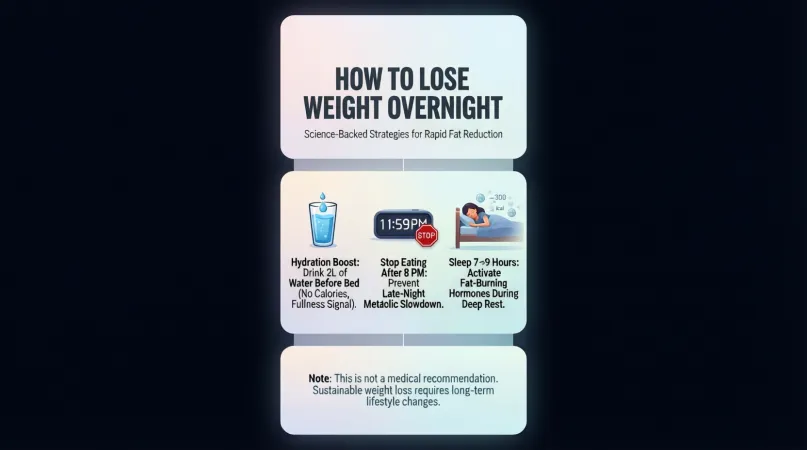
We’ve all been there scrolling through our phones at midnight, frantically Googling “how to lose weight overnight”, hoping for a miracle before a big event or morning weigh-in.
I’ve been there too. I thought skipping dinner or drinking some magic detox tea would instantly shed pounds.
Spoiler alert: it doesn’t. But here’s the good news you can wake up feeling lighter, less bloated, and more energized with a few smart, science-backed habits.
Overnight weight loss doesn’t mean burning fat while you sleep; it’s about reducing water retention, supporting digestion, and calming your body so it feels its best by morning.
In this guide, I’ll break down everything you need to know from debunking myths and nighttime habits that sabotage your progress, to simple tips and foods that help you wake up lighter and ready to tackle your day with confidence.
Can You Really Lose Weight Overnight?
The first question on everyone’s mind is obvious: Can you really lose weight overnight? The short answer: not the way most people imagine. True fat loss takes time, consistent eating habits, exercise, and proper sleep. Your body can’t magically burn several pounds of fat while you sleep.
So why do some people wake up lighter in the morning? Most overnight changes come from water weight, digestion, and reduced bloating, not actual fat loss. When you eat late, consume salty or processed foods, or drink alcohol, your body retains water. Poor sleep or stress can make this worse. Fix these factors, and your body naturally sheds excess water while you sleep, giving the scale a small, noticeable drop by morning.
Think of it this way: overnight weight loss is less about melting fat and more about feeling lighter and less bloated. It’s like hitting a “reset” button for your body, clearing out excess water, calming inflammation, and supporting digestion. These small wins can boost your confidence and motivate healthier choices during the day.
In this guide, we’ll explore practical tips and nighttime habits that actually make a difference. From the foods you eat and drinks you sip to the way you sleep and relax, these strategies won’t perform miracles, but they’ll help you wake up feeling your absolute best—and that’s the closest thing to overnight weight loss that actually works.
Common Myths About Overnight Weight Loss
When it comes to losing weight overnight, there’s no shortage of myths floating around the internet. Understanding these myths can save you time, frustration, and a lot of false hope.
Myth 1: Skipping Dinner Will Melt Fat
Some believe that avoiding food at night automatically burns fat. While skipping a heavy late-night meal may reduce calorie intake slightly, it won’t make fat disappear overnight. In fact, it can backfire—your metabolism may slow, and late-night cravings could lead to overeating the next day.
Myth 2: Detox Teas and Powders Work Instantly
“Miracle” teas or powders promise rapid overnight weight loss. Most of these work as diuretics, temporarily flushing water from your body. The scale may drop, but this is not fat loss—it’s just water leaving your system.
Myth 3: Sweating in Your Sleep or Sauna Burns Fat
Some claim that sleeping in heavy clothing or sitting in a sauna overnight melts fat. While sweating removes water, it doesn’t target fat. Once you hydrate, that weight comes back.
Myth 4: Starving Yourself Leads to Instant Results
Extreme fasting or calorie restriction may cause temporary weight loss, but it’s unsafe and unsustainable. Your body goes into “survival mode,” slowing metabolism and increasing hunger hormones.
The truth? Overnight weight loss is mostly about reducing bloating, water retention, and inflammation—not actual fat loss. Understanding these myths helps you focus on habits that genuinely work, like smarter eating, proper hydration, and quality sleep.
Factors That Cause Overnight Weight Gain
Waking up heavier than expected can be frustrating, especially when you feel like you’ve done everything “right.” But the truth is, overnight weight fluctuations are normal, and they rarely reflect real fat gain. Most of it comes from water retention, digestion, and lifestyle factors.
1. High Sodium Intake
Salt makes your body hold onto water. Eating salty foods late in the evening—think chips, pizza, or processed meals—can lead to noticeable bloating by morning.
2. Late-Night Snacking
Even healthy snacks can add extra calories if eaten too close to bedtime. Beyond calories, heavy meals before sleep slow digestion and increase the feeling of fullness in the morning.
3. Alcohol and Sugary Drinks
Alcohol can dehydrate your body initially, but it also triggers water retention later. Sugary drinks spike insulin, which can cause your body to store extra water and make you feel puffy.
4. Poor Sleep and Stress
Lack of sleep or high stress increases cortisol, a hormone linked to water retention and bloating. Poor sleep also affects hunger hormones, making you crave salty or sugary foods the next day.
5. Hormonal Fluctuations
For women, hormonal changes during the menstrual cycle can cause temporary water retention and bloating. Even small fluctuations can reflect on the scale overnight.
The key takeaway? Overnight weight gain is often temporary and mostly due to water, digestion, and lifestyle habits, not fat. By managing these factors—like reducing salt, hydrating properly, and getting quality sleep—you can wake up feeling lighter, less bloated, and ready to start your day on the right note.
How to Wake Up Feeling Lighter Overnight
If you’re hoping to wake up feeling lighter, the good news is that there are simple, practical steps you can take tonight that actually work. While they won’t melt fat while you sleep, they help reduce bloating, water retention, and discomfort, so you start your day feeling refreshed.
1. Eat a Light, Early Dinner
Aim for a meal that’s high in protein and fiber, but low in salt and refined carbs. Think grilled chicken with vegetables, a small salad with lean protein, or a veggie omelet. Finish eating at least 2–3 hours before bedtime to give your body time to digest.
2. Hydrate Smartly
Drink water throughout the day, but avoid gulping large amounts right before bed. Staying hydrated flushes out excess sodium and prevents water retention, helping you feel lighter in the morning.
3. Cut Late-Night Salt and Sugar
High-sodium and sugary foods cause bloating and puffiness. Swap chips, processed snacks, and sugary drinks for herbal tea or a handful of unsalted nuts if you need something before bed.
4. Optimize Your Sleep
Quality sleep is crucial. Aim for 7–9 hours in a cool, dark room. Proper sleep balances hormones that control hunger and water retention, making a noticeable difference in how you feel.
5. Relax and De-Stress
Stress increases cortisol, which can make your body hold water. A short meditation, deep breathing, or reading before bed can calm your body and prevent bloating.
By combining these steps, you may not shed pounds of fat overnight—but you will wake up feeling lighter, less bloated, and ready to start your day energized.
Foods That Help Reduce Bloating Overnight
What you eat in the evening plays a huge role in how light—or bloated—you feel in the morning. Choosing the right foods can help your digestion, reduce water retention, and make a noticeable difference on the scale.
1. High-Water Foods
Foods like cucumber, watermelon, celery, and tomatoes are packed with water and electrolytes. They naturally hydrate your body while helping flush out excess sodium, reducing puffiness and bloating.
2. Herbal Teas
Peppermint, chamomile, or ginger tea before bed can calm your digestive system and relax your stomach muscles. They’re also a comforting alternative to sugary drinks or alcohol that can contribute to bloating.
3. Lean Protein
Protein is easy to digest and keeps you full through the night. Opt for eggs, Greek yogurt, or a small portion of lean chicken. Avoid heavy, greasy, or fried proteins late in the evening—they can slow digestion and increase bloating.
4. Low-Carb Vegetables
Non-starchy vegetables such as spinach, zucchini, and bell peppers are high in fiber but low in carbohydrates, which prevents gas and water retention that comes from refined carbs.
5. Foods to Avoid
Try to skip processed foods, chips, salty snacks, and carbonated beverages. These foods trap water in your body and make you feel puffy in the morning.
By choosing the right foods and avoiding bloating triggers, you can set yourself up for a lighter, more comfortable morning. Think of it as giving your body a gentle reset overnight—hydrated, calm, and ready to take on the day.
Nighttime Habits That Sabotage Weight Loss
Even if you eat well and stay hydrated, certain nighttime habits can secretly make you feel heavier or bloated by morning. Being aware of these can help you wake up lighter and more energized.
1. Eating Too Late
Late-night snacking, especially heavy or processed foods, slows digestion and can leave you feeling puffy in the morning. Give your body at least 2–3 hours between your last meal and bedtime to properly process food.
2. Excess Screen Time
Scrolling through your phone or watching TV before bed can interfere with sleep quality. Poor sleep increases cortisol, a hormone that encourages water retention and bloating. Try a relaxing pre-bed routine like reading or stretching.
3. Alcohol and Sugary Beverages
Alcohol can cause dehydration, then water retention, making you feel bloated. Sugary drinks spike insulin, which can trap water in your tissues. Limit these at night to reduce overnight puffiness.
4. Not Drinking Enough Water During the Day
It may sound counterintuitive, but dehydration actually makes your body hold onto water. Sip water consistently throughout the day so your body doesn’t overcompensate at night.
5. Skipping Relaxation
Stressful evenings increase cortisol, slow digestion, and trap water. Meditation, deep breathing, or even light stretching can calm your system and prevent overnight bloating.
Breaking these habits doesn’t just help with overnight weight fluctuations—it also sets you up for long-term weight management. By adjusting your nighttime routine, you can wake up feeling lighter, refreshed, and ready to tackle your day.
Realistic Expectations: What Overnight Weight Loss Really Means
It’s important to set realistic expectations when thinking about overnight weight loss. Many people imagine shedding several pounds of fat while they sleep—but that’s simply not how the body works. True fat loss requires time, consistency, and a calorie deficit, which can’t be achieved in a single night.
So, what actually happens overnight? Most changes you see on the scale are temporary and related to water weight, digestion, and reduced bloating. For example, drinking water, eating a lighter dinner, and sleeping well can help your body flush out excess sodium and support smooth digestion. This is why some mornings, the scale shows a small drop even without any fat being lost.
Understanding this distinction is key. Overnight “weight loss” is about feeling lighter and less bloated, not instant fat melting. By focusing on these small wins, you’re more likely to maintain motivation for long-term progress.
Another important point: don’t obsess over the scale first thing in the morning. Your weight naturally fluctuates daily due to hydration, hormones, and digestion. Instead, pay attention to how your body feels—lighter, less puffy, and energized.
By combining realistic expectations with practical nighttime habits, you can set yourself up for success. These small, science-backed changes will help you wake up feeling better physically and mentally, giving you a head start on your long-term weight management goals.
Quick Morning Boost: How to Feel Lighter After Sleep
Waking up feeling heavier than expected can be frustrating, but there are simple morning habits that help you feel lighter and more energized right away. These small steps complement your nighttime routine and set the tone for the rest of your day.
1. Hydrate Immediately
After 7–9 hours of sleep, your body is naturally slightly dehydrated. Drinking a glass of water first thing helps flush out excess sodium, kickstarts digestion, and reduces bloating. Add a slice of lemon for a gentle metabolism boost.
2. Stretch or Do Light Movement
A few minutes of stretching, yoga, or a short walk increases circulation and helps release trapped water or gas, making your body feel less stiff and bloated.
3. Eat a High-Protein Breakfast
Opt for eggs, Greek yogurt, or a smoothie with protein and fiber. This stabilizes blood sugar, keeps you full, and prevents mid-morning cravings that can lead to bloating later.
4. Optional Scale Check—but Don’t Obsess
If you track your weight, check the scale—but remember, morning fluctuations mostly reflect water weight and digestion, not fat loss. Focus on how your body feels rather than just the numbers.
5. Morning Movement or Sunlight
Getting sunlight or doing light cardio can regulate your circadian rhythm, improve digestion, and help your body naturally release retained water.
By combining these simple morning habits with your evening routine, you can consistently wake up feeling lighter, less bloated, and more confident. These small adjustments don’t promise miracles, but they create a real, tangible difference in how your body feels each day.
Long-Term Tips for Sustainable Weight Loss
While overnight strategies can help you feel lighter and reduce bloating, real fat loss and lasting results require consistent, long-term habits. Focusing on sustainable lifestyle changes ensures that you not only feel good in the morning but also achieve genuine weight management.
1. Prioritize a Balanced Diet
Eating a variety of whole foods—vegetables, lean proteins, whole grains, and healthy fats—supports steady weight loss and prevents water retention. Avoid crash diets or extreme restrictions, which can backfire and harm your metabolism.
2. Stay Hydrated
Consistent hydration throughout the day is key. Drinking enough water prevents your body from holding excess fluid, supports digestion, and boosts energy levels.
3. Exercise Regularly
Incorporate both cardio and strength training into your routine. Cardio helps burn calories, while strength training builds muscle, which increases metabolism. Even short daily walks or home workouts make a difference over time.
4. Prioritize Sleep
Quality sleep is crucial for hormone regulation, appetite control, and reducing water retention. Aim for 7–9 hours per night and maintain a consistent sleep schedule.
5. Manage Stress
High stress leads to elevated cortisol levels, which can trigger water retention and overeating. Incorporate relaxation techniques like meditation, yoga, or deep breathing into your daily routine.
6. Avoid Quick Fixes
Skip detox teas, fad diets, and extreme overnight solutions. They may give temporary results, but sustainable changes come from steady, healthy habits.
By combining these long-term strategies with the nighttime and morning tips in this guide, you can wake up lighter, reduce bloating, and achieve lasting weight loss—all while feeling energized and confident every day.
FAQs: Common Questions About Overnight Weight Loss
1. Can you really lose weight overnight?
Not in terms of fat loss. Overnight weight changes are mostly due to water weight, digestion, and reduced bloating. While the scale may show a small drop, it’s temporary and not actual fat loss.
2. How much weight can I realistically lose overnight?
Typically, people can lose 0.5–2 pounds overnight, mainly from water and waste leaving the body. Fat loss requires longer-term lifestyle changes.
3. What foods help reduce bloating before bed?
Opt for high-water foods like cucumber and watermelon, herbal teas like peppermint or chamomile, lean proteins, and low-carb vegetables. Avoid processed, salty, or fried foods late at night.
4. Do detox teas work for overnight weight loss?
Most detox teas act as diuretics, temporarily flushing water from your system. They may make you feel lighter, but they don’t burn fat. Overuse can also cause dehydration or electrolyte imbalance.
5. Is late-night snacking the biggest culprit for overnight weight gain?
Late-night snacking can contribute to bloating and water retention, especially if it’s high in salt or sugar. Giving your body 2–3 hours to digest before bed helps prevent overnight puffiness.
6. How can I wake up feeling lighter quickly?
Hydrate first thing in the morning, do light stretching or yoga, eat a high-protein breakfast, and get sunlight exposure. These habits help reduce bloating and kickstart digestion.
Understanding the truth behind overnight weight changes helps you focus on healthy habits, feel lighter in the morning, and stay motivated for long-term weight management.
Conclusion
Losing weight overnight is a concept that’s often misunderstood. While your body can’t magically burn fat while you sleep, you can wake up feeling lighter, less bloated, and more energized by making smart choices before bed. The key is understanding the difference between temporary water weight and real fat loss. Most overnight changes are due to digestion, hydration, and reduced inflammation—not miracle fat burning.
By adopting simple habits, you can set your body up for success. Eating a light, low-sodium dinner, staying hydrated, avoiding late-night snacks, and choosing foods that support digestion can make a noticeable difference by morning. Pairing these habits with quality sleep, stress management, and a calm nighttime routine ensures your body functions optimally overnight.
Morning habits, like stretching, drinking water, and eating a protein-rich breakfast, further help you feel lighter and more energized. Over time, combining these practices with long-term lifestyle changes—balanced nutrition, regular exercise, and consistent sleep—leads to real, sustainable weight loss and improved overall health.
Remember, the goal isn’t instant fat loss but creating a routine that helps your body feel its best every day. Focus on small wins, listen to your body, and be consistent. By understanding what truly affects overnight weight changes, you can stop chasing myths, feel confident in your body, and enjoy both short-term results and long-term health benefits.

Joan Didion is a passionate writer at DreamMaening.com, exploring the hidden meanings behind dreams, symbols, and life’s mysteries with clarity and insight.