Dark K-pop concepts aren’t just about visuals, makeup, or edgy performances they feel deep, emotional, and strangely spiritual. When idols portray demon hunters, alter egos, or inner battles, it taps into something ancient inside us. This is where Rumi, the 13th-century mystic poet, quietly enters the conversation.
Rumi spent his life writing about inner demons, the ego, pain, love, and spiritual awakening. K-pop demon hunter narratives though modern and cinematic mirror the same timeless struggle: light versus darkness within the self. One speaks through poetry, the other through music, choreography, and lore, but the message feels uncannily similar.
In this article, we’ll explore how Rumi’s spiritual philosophy connects with K-pop’s demon hunter imagery, why these dark concepts resonate so strongly with fans today, and how ancient mysticism is being reborn through modern pop culture. If you’ve ever felt seen by dark K-pop eras, this deeper meaning might explain why.
Who Was Rumi?
Jalāl ad-Dīn Rumi was not just a poet; he was a spiritual teacher who believed that the greatest battles humans fight are not against the world, but within themselves. Living in the 13th century, Rumi wrote about love, pain, loss, and transformation in a way that still feels deeply personal today. His poetry wasn’t meant to be admired from a distance it was meant to wake the soul up.
One of Rumi’s most powerful ideas is the concept of inner demons, often linked to the ego, fear, and unchecked desires. Instead of destroying these demons, Rumi encouraged people to understand and transform them. He believed that darkness exists for a reason: it pushes us toward growth, humility, and spiritual awakening. In Rumi’s view, suffering is not punishment it is guidance.
Rumi often described the human soul as being divided between a false self and a true self. The false self clings to identity, status, and control, while the true self seeks unity, love, and divine truth. This internal conflict is where transformation begins. By facing pain instead of avoiding it, a person begins to shed illusions and move closer to inner freedom.
What makes Rumi timeless is his ability to explain spiritual struggles in human language. His teachings are not about escaping the world, but about becoming fully alive within it. This same idea quietly echoes in modern storytelling especially in K-pop’s demon hunter narratives, where idols confront darkness to reclaim their true selves.
What Are “Demon Hunters” in K-Pop Lore?
In K-pop, the idea of “demon hunters” rarely refers to literal monsters. Instead, it functions as a powerful symbolic narrative used to express inner conflict, transformation, and survival. Through music videos, concept films, lyrics, and stage personas, idols are often portrayed as characters battling darkness sometimes hunting demons, sometimes becoming them, and sometimes realizing the demon was within all along.
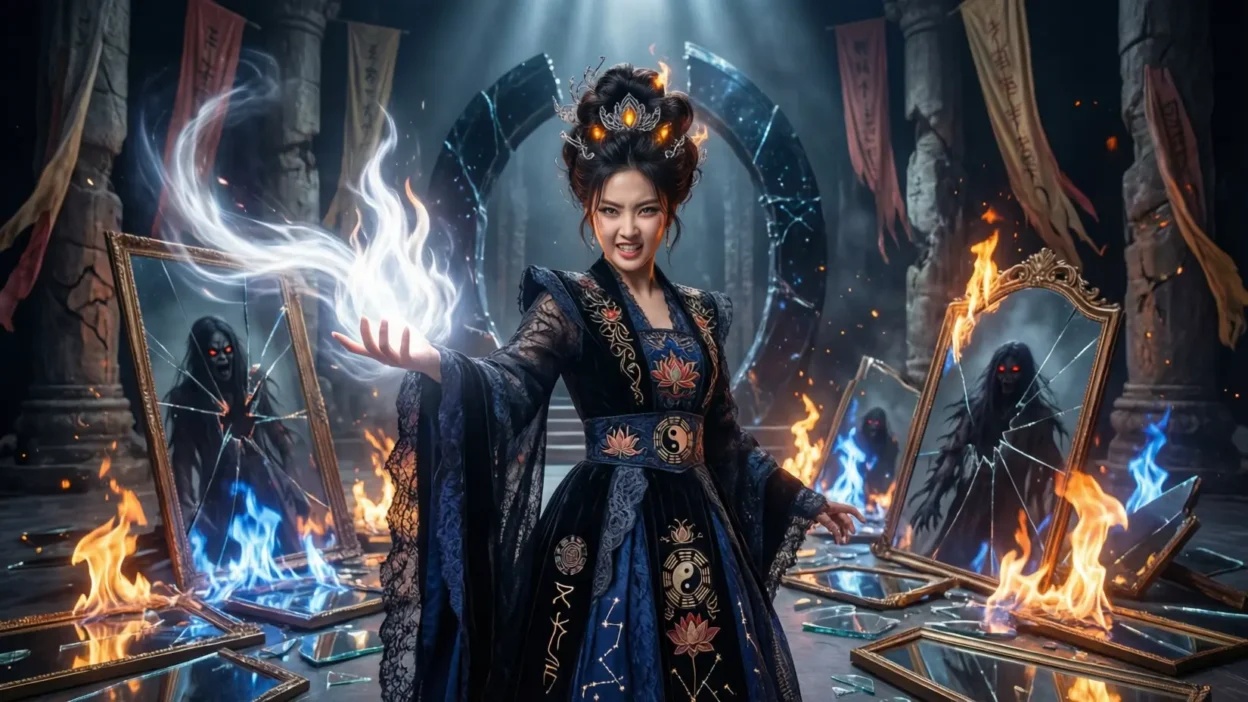
These demon hunter concepts usually appear during darker eras, where themes of fear, temptation, identity loss, or emotional collapse take center stage. Visually, this is expressed through shadows, blood imagery, broken mirrors, fire, chains, or supernatural powers. Symbolically, these elements represent inner struggles such as pressure from fame, mental exhaustion, loneliness, or the fear of losing one’s true self.
What makes K-pop unique is its use of lore long, interconnected storylines that evolve across albums. Idols may have dual identities, alternate universes, or cursed versions of themselves. The “hunter” is often not fighting an external enemy, but a shadow self that threatens to consume them. This aligns closely with psychological and spiritual interpretations of demon symbolism.
Fans are deeply drawn to these narratives because they feel personal. The demon hunter becomes a mirror, reflecting the listener’s own battles with anxiety, insecurity, or self-doubt. Victory is rarely simple; it usually requires sacrifice, self-awareness, or rebirth. In this way, K-pop demon hunters are not glorifying darkness they are dramatizing the painful process of healing, growth, and reclaiming identity in a world that constantly demands perfection.
The Psychology Behind Dark K-Pop Concepts
Dark K-pop concepts resonate so deeply because they tap into the psychology of the human mind, especially the parts we rarely talk about. At the center of this fascination is what psychologist Carl Jung called the Shadow Self the hidden side of our personality that holds fear, anger, insecurity, and unexpressed desires. Instead of denying this shadow, Jung believed healing begins when we acknowledge and integrate it.
K-pop demon hunter narratives bring this psychological idea to life. When idols portray alter egos or corrupted versions of themselves, they are symbolizing the inner conflict between who we appear to be and who we truly are. The “demon” becomes a visual form of suppressed emotions, trauma, or pressure. This makes the story emotionally relatable, even when it looks supernatural on the surface.
For many listeners, especially younger audiences, these concepts reflect real struggles with identity, expectations, and mental health. The intense training system, public scrutiny, and perfectionism associated with idol culture amplify these themes. When idols confront darkness in their storylines, fans subconsciously feel permission to face their own hidden emotions.
Music itself acts as a form of emotional release. Dark sounds, heavy choreography, and dramatic visuals allow both artists and fans to safely process difficult feelings. Rather than promoting negativity, these concepts create catharsis a psychological cleansing that helps people feel understood and less alone.
This is where psychology and spirituality overlap. Just as Rumi taught that inner darkness must be faced, not feared, K-pop’s darker concepts remind us that healing doesn’t come from pretending everything is light. It comes from recognizing the shadow, understanding it, and transforming it into strength.
Rumi’s Inner Demons vs K-Pop’s Visual Demons
Rumi and K-pop demon hunter narratives approach demons from different directions, yet both point toward the same truth: the real battle is internal. Rumi’s demons are invisible. They live in the ego, fear, pride, and attachment to false identities. He never described them as monsters to be slain, but as teachers that force the soul to awaken. In Rumi’s world, confronting darkness is not about destruction it is about understanding and transformation.
K-pop, on the other hand, gives these inner struggles a visual form. Demons appear as shadows, alter egos, supernatural enemies, or corrupted versions of the self. What Rumi expressed through poetry and silence, K-pop expresses through sound, movement, and imagery. The language is different, but the meaning remains strikingly similar.
In Rumi’s teachings, pain cracks the illusion of the ego and allows divine light to enter. This idea echoes strongly in K-pop storylines where idols must lose themselves before they can be reborn. The fall is not failure it is a necessary step toward self-discovery. Broken wings, blood-stained hands, or shattered mirrors all symbolize the same message: transformation requires surrender.
Another key difference lies in resolution. Rumi emphasizes love as the ultimate healer, while K-pop often portrays victory through unity, self-acceptance, or reclaiming one’s true name. Yet both reject the idea of escaping darkness. Instead, they invite us to walk through it consciously.
By turning invisible struggles into visible stories, K-pop makes Rumi’s ancient wisdom accessible to modern audiences. The demon is no longer something to fear it becomes a guide leading the individual toward deeper self-awareness and spiritual growth.
Symbolism Shared by Rumi and K-Pop Demon Hunters
Despite the centuries between them, Rumi’s poetry and K-pop demon hunter concepts rely on remarkably similar symbolic language. These symbols act as bridges between the spiritual and emotional worlds, allowing complex inner experiences to be felt rather than explained. One of the most powerful shared symbols is light versus darkness. For Rumi, darkness is not evil it is the womb where transformation begins. K-pop uses the same contrast, visually showing idols move through shadow before stepping into light.
Fire is another recurring symbol. In Rumi’s work, fire represents purification and divine love that burns away the ego. In K-pop, flames often appear during moments of destruction or rebirth, signaling the end of an old identity. Fire does not destroy the soul; it reshapes it.
Masks and mirrors also play a central role. Rumi spoke about the false self the mask worn to survive in society. K-pop demon lore frequently features literal masks or shattered mirrors to represent fractured identity and hidden truths. The breaking of the mask symbolizes awakening.
The theme of death and rebirth connects both worlds deeply. Rumi described spiritual death as the end of illusion, followed by a higher state of awareness. K-pop comebacks often mirror this cycle: dark eras represent descent, while later releases symbolize rebirth and clarity.
Even silence and sound carry meaning. Rumi valued silence as spiritual depth, while K-pop uses intense sound and choreography to express the same inner turmoil. Both are different paths to the same realization.
Through shared symbolism, ancient mysticism and modern pop culture tell one universal story: to become whole, one must face darkness, shed illusions, and rise transformed.
Alter Ego Culture From Rumi’s False Self to Idol Personas
The idea of the alter ego sits at the heart of both Rumi’s teachings and K-pop demon hunter narratives. Rumi often spoke about the false self the identity shaped by ego, fear, and social expectation. This version of the self clings to control, recognition, and survival, keeping the soul distant from its true nature. According to Rumi, spiritual growth begins when this false self is confronted and slowly dissolved.
K-pop visualizes this inner conflict through idol personas and alter egos. Many groups introduce shadow versions of themselves darker, corrupted, or more powerful reflections that exist alongside their public image. These alter egos are not random characters; they represent the tension between authenticity and performance, between who the idol is and who they are expected to be.
Fame intensifies this struggle. Idols are required to maintain perfection while hiding exhaustion, fear, or vulnerability. The demon or shadow persona becomes a symbolic outlet for everything that cannot be openly expressed. Instead of denying these emotions, K-pop lore brings them to the surface in a dramatic and artistic way.
Rumi believed that the false self must “die” for the true self to emerge. This symbolic death appears frequently in K-pop narratives, where alter egos are defeated, merged, or transformed. The goal is not to erase darkness, but to integrate it.
By turning inner conflict into story and performance, K-pop reflects Rumi’s ancient insight: liberation does not come from pretending to be whole, but from honestly facing every version of oneself even the broken ones.
Love as the Ultimate Weapon Against Demons
In both Rumi’s teachings and K-pop demon hunter narratives, love emerges as the ultimate force for transformation. For Rumi, love is not simply romantic it is divine, unconditional, and capable of dissolving the ego and all inner darkness. He often described it as the key to confronting fear, pain, and the false self, guiding the soul toward freedom and illumination.
K-pop demon hunters echo this spiritual principle through storytelling. The battles against demons whether internal or external are rarely won through violence alone. Instead, victory often comes from connection, empathy, and self-acceptance. Fans witness idols confronting their shadow selves, overcoming despair, and ultimately embracing themselves fully. Love, whether self-directed or shared with others, becomes the power that transforms vulnerability into strength.
This symbolism resonates deeply with audiences, particularly younger fans navigating identity, anxiety, or societal pressure. Watching their favorite idols use love compassion, unity, or self-belief to “defeat demons” provides not just entertainment, but inspiration for their own lives. The demon becomes not a curse, but a teacher, guiding them to discover resilience and inner peace.
Even visually, K-pop reinforces this idea. Light breaking through darkness, hands reaching toward each other, and protective gestures often accompany moments of triumph, echoing Rumi’s metaphor of divine love illuminating the shadow within. Both in poetry and performance, the message is clear: darkness cannot be ignored, but love can transform it into wisdom, healing, and liberation.
Demon Hunting as a Metaphor for Mental Health
K-pop demon hunter narratives often serve as more than entertainment they act as a metaphor for mental health struggles. In these stories, the demons idols face symbolize not literal monsters, but the pressures, fears, and insecurities that exist within all of us. Anxiety, depression, self-doubt, and burnout are given a visual and narrative form, making them tangible and relatable for fans.
This approach mirrors Rumi’s philosophy. He believed that confronting our inner demons the ego, fear, and pain is necessary for spiritual growth. Similarly, K-pop demon hunter eras dramatize these struggles, allowing both idols and fans to explore emotional turbulence in a safe, symbolic space. The narrative acknowledges that darkness is real, unavoidable, but not permanent.
Fans often connect to these narratives on a deeply personal level. Seeing idols battle shadow selves or overcome a dark era mirrors their own experiences with stress, emotional challenges, or societal expectations. It normalizes struggle and emphasizes that recovery and transformation are possible. Victory in these stories often involves self-awareness, acceptance, and resilience key aspects of mental well-being.
K-pop’s intense visuals, choreography, and music amplify the emotional journey, creating a cathartic experience. Just as Rumi’s poetry allowed readers to confront their shadows, demon hunter stories give fans a framework to reflect on personal challenges. By blending mythology, symbolism, and emotion, K-pop transforms inner conflict into art that heals, empowers, and inspires growth.
Spiritual Awakening Through Pain Rumi’s Core Message in K-Pop
Both Rumi and K-pop demon hunter narratives emphasize that pain is not a curse, but a doorway to awakening. For Rumi, suffering is a teacher. Inner struggles, heartbreak, and ego clashes are opportunities for the soul to evolve. He often described the process of spiritual growth as a journey through darkness, where one must face fear, loss, and the shadow self before emerging into enlightenment.
K-pop mirrors this philosophy in its darker eras. Idols frequently portray narratives of despair, struggle, or corruption, only to rise stronger, transformed, and reborn. The dramatic fall is never the end; it is the essential step before growth. Broken wings, shattered mirrors, or blood-stained visuals symbolize not destruction, but the purification of the self a visual metaphor for what Rumi expressed poetically: the light enters through the wounds.
This theme resonates with audiences who see their own personal battles reflected in these stories. Adolescents and young adults, in particular, identify with the message that confronting pain is a path to self-understanding. Dark concepts in K-pop create a safe space to process emotions that might otherwise feel isolating or overwhelming.
Ultimately, both Rumi and K-pop demon hunter narratives teach the same spiritual lesson: transformation requires courage, self-reflection, and the willingness to face darkness. Pain is a catalyst, not a prison. The journey through shadow leads to clarity, resilience, and a deeper sense of self reminding us that even in the darkest moments, growth and illumination are possible.
Why Fans Feel Spiritually Connected to These Concepts
One of the most fascinating aspects of K-pop demon hunter narratives is the deep spiritual connection fans feel with them. It’s more than entertainment it’s a mirror reflecting inner struggles, emotional growth, and the universal journey through darkness toward light. Fans often see themselves in the idols’ battles, relating to the symbolic demons as representations of their own fears, insecurities, or personal challenges.
This connection mirrors Rumi’s teachings. He believed that every human faces inner conflict, and that awareness of these struggles is the first step toward transformation. K-pop demon hunter stories externalize these inner battles, giving them form, color, and drama. By watching idols confront their shadows, fans experience catharsis, insight, and even hope, as if they are witnessing spiritual lessons unfold in real time.
The sense of community also enhances this connection. Fans often share interpretations, create fan art, and discuss the symbolic meaning of concepts online. This collective exploration acts like a modern ritual, reminiscent of spiritual gatherings where teachings are shared and internalized. Through this engagement, fans do not just passively consume content they actively participate in the process of meaning-making and emotional growth.
Furthermore, the music, choreography, and visuals engage multiple senses simultaneously, making the spiritual symbolism more immersive. Just as Rumi’s poetry used metaphor to awaken the soul, K-pop demon hunter concepts use performance to reach hearts and minds. The result is a shared spiritual experience, bridging ancient mysticism and contemporary culture in a way that resonates deeply with today’s audiences.
Is K-Pop Demon Lore Intentional or Unconscious Spirituality?
One of the most intriguing questions about K-pop demon hunter concepts is whether their spiritual depth is intentional or unconscious. On the surface, these dark, dramatic narratives might appear purely aesthetic an edgy theme to attract attention or generate buzz. However, when we examine the patterns, symbolism, and recurring archetypes, a deeper layer emerges that mirrors timeless spiritual truths, much like those expressed by Rumi centuries ago.
Some scholars and fans argue that K-pop creators consciously draw on archetypal storytelling, mythology, and psychological symbolism. Fire, shadows, masks, and dual identities all have universal meanings, resonating with the human experience across cultures. Even if not explicitly inspired by Rumi, these motifs align with his teachings about inner demons, ego, and transformation.
On the other hand, much of this symbolism may be unconscious, emerging naturally because artists and creators are exploring personal and cultural struggles. Pressure, identity, and emotional conflict are universal challenges, and dramatizing them as demon hunts is a natural, almost instinctive storytelling choice. In this sense, K-pop becomes a modern mirror of the collective unconscious, showing what Rumi described in poetry: that humans must confront their shadows to awaken spiritually.
Whether intentional or unconscious, the effect on fans is real. Audiences experience emotional resonance, catharsis, and introspection. The fusion of performance, story, and symbolism allows modern pop culture to act as a vessel for ancient spiritual wisdom. In essence, even if the creators did not consciously reference Rumi, the message of transformation through darkness is alive and unmistakable.
Cultural Bridge East Meets Middle Eastern Mysticism
K-pop demon hunter narratives also serve as a fascinating cultural bridge, connecting modern East Asian pop culture with timeless Middle Eastern spiritual wisdom.
While Rumi’s teachings emerged from 13th-century Persia, their core principles facing inner demons, transcending the ego, and embracing transformation through love and pain resonate universally.
K-pop, though rooted in Korean culture, taps into these same archetypes, demonstrating how spiritual themes can transcend time and geography.
In K-pop, artists often use symbols like fire, shadows, mirrors, and masks to depict struggle, identity, and rebirth.
These visual motifs echo Rumi’s metaphors of light versus darkness, the false self, and spiritual awakening. The shared imagery shows that even across vastly different cultures, humans grapple with the same fundamental questions: Who am I?
How do I overcome fear and pain? How can I transform suffering into growth?
Moreover, the global nature of K-pop allows these mystical ideas to spread worldwide. Fans from different countries engage with the symbolism, discuss interpretations online, and create fan art or analysis, forming a collective space for reflection. This mirrors the communal aspect of Sufi practice, where shared storytelling, poetry, and music create spiritual connection and learning.
Ultimately, K-pop demon hunters illustrate that ancient spiritual insights are not confined to history or region. By blending dramatic storytelling, music, and dance, K-pop revives and globalizes themes that Rumi articulated centuries ago, showing that the journey through darkness to self-realization is a truly universal human experience.
Controversies & Misinterpretations
While K-pop demon hunter concepts are deeply symbolic, they have often sparked controversy and misinterpretation. Many critics see the dark imagery demons, blood, shattered mirrors, and fire and assume it promotes violence, occult practices, or negativity.
Some viewers take the visuals literally, missing the psychological and spiritual symbolism behind the artistry. This misunderstanding can overshadow the deeper meaning: the portrayal of internal struggles and the journey toward self-discovery.
Another common misinterpretation is viewing demon hunter narratives as purely marketing gimmicks. While commercial appeal plays a role, the recurring patterns of shadow selves, rebirth, and transformation suggest a more profound resonance.
Whether intentional or unconscious, these themes reflect timeless archetypes that humans have explored through myth, poetry, and ritual for centuries. In other words, the spiritual depth exists even in a pop culture context.
Fans themselves sometimes misread the stories, focusing solely on the “darkness” and neglecting the eventual resolution or healing narrative. K-pop demon hunters rarely end in permanent despair; they emphasize growth, self-acceptance, and transformation. Misunderstanding this can lead to the perception that the content glorifies negativity, rather than showing a realistic emotional journey.
Finally, the cross-cultural nature of these concepts can cause confusion. Symbols rooted in Sufi mysticism or universal archetypes are sometimes lost or misinterpreted by global audiences unfamiliar with their origins.
Despite these controversies, the enduring popularity of dark K-pop eras shows that, for many, the message of facing one’s demons and emerging stronger is clear, resonant, and profoundly inspiring.
Lessons We Can Learn From Rumi-Style Demon Hunting
K-pop demon hunter narratives, when viewed through the lens of Rumi’s teachings, offer powerful life lessons for fans and anyone navigating the challenges of modern life. The first lesson is the importance of facing your inner demons. Rumi emphasized that avoiding fear, ego, or emotional pain only strengthens them. Similarly, the dramatic battles in K-pop symbolize the necessity of confronting personal struggles head-on rather than hiding from them.
The second lesson is about self-acceptance and transformation. Both Rumi and K-pop narratives teach that darkness is not inherently evil it is part of the human experience and a catalyst for growth. Pain, failure, or loss can become tools for self-awareness and resilience. By integrating our shadow selves, we emerge stronger, wiser, and more authentic.
A third lesson is that love and compassion are transformative powers. Rumi often wrote about love dissolving fear and ego, and K-pop demon hunter stories frequently highlight relationships, connection, or self-love as the force that overcomes darkness. This teaches fans that healing comes not from avoidance, but from embracing ourselves and others with empathy.
Finally, there is a lesson in hope and rebirth. K-pop narratives frequently depict idols rising from darkness after a period of struggle, echoing Rumi’s belief that spiritual growth is cyclical: death of the ego leads to renewal. By reflecting on these stories, fans learn that challenges are not permanent barriers they are opportunities for awakening, courage, and personal evolution.
Rumi-style demon hunting reminds us that confronting pain, embracing love, and transforming struggle into growth is a universal, timeless journey that continues to resonate in modern pop culture.
Conclusion:
At first glance, Rumi’s 13th-century mysticism and modern K-pop demon hunter narratives might seem worlds apart. One is centuries old, expressed through delicate poetry; the other is vibrant, visual, and accompanied by music and choreography.
Yet a closer look reveals that both share the same universal exploration of the human soul. They remind us that life’s greatest battles are not against external enemies, but the shadows within ourselves.
Rumi taught that inner demons ego, fear, pain, and attachment are not meant to be destroyed, but understood and transformed. K-pop demon hunter narratives visualize these struggles, turning the invisible into a spectacle that resonates emotionally, psychologically, and even spiritually. Fans see themselves reflected in the battles, the fall, and the eventual rise, experiencing catharsis and insight along the way.
Both Rumi and K-pop teach that darkness is not the enemy. Instead, it is a teacher, a guide, and a gateway to growth. Pain, failure, and fear are part of the journey, while love, self-acceptance, and courage are the tools for transformation.
Whether expressed through mystical verse or elaborate stage performance, the message is the same: confront your shadow, embrace your true self, and emerge stronger.
Ultimately, Rumi would likely recognize the same spiritual truth in K-pop demon hunters that he wrote about in his poetry centuries ago. The medium may have changed, but the lesson remains timeless: the path through darkness leads to awakening, and every demon hunted is an opportunity to discover the light within.

Ta-Nehisi Coates is a celebrated American author and journalist, renowned for his deep insights into culture, history, and the human experience. At Dreammaening.com, he brings his thoughtful perspective to the world of dreams, symbolism, and spiritual meaning, helping readers uncover the deeper messages behind their nighttime visions. With a distinctive voice that blends storytelling, research, and reflection, Coates guides readers on a journey of self-discovery and understanding, making complex ideas accessible and engaging for everyone.