
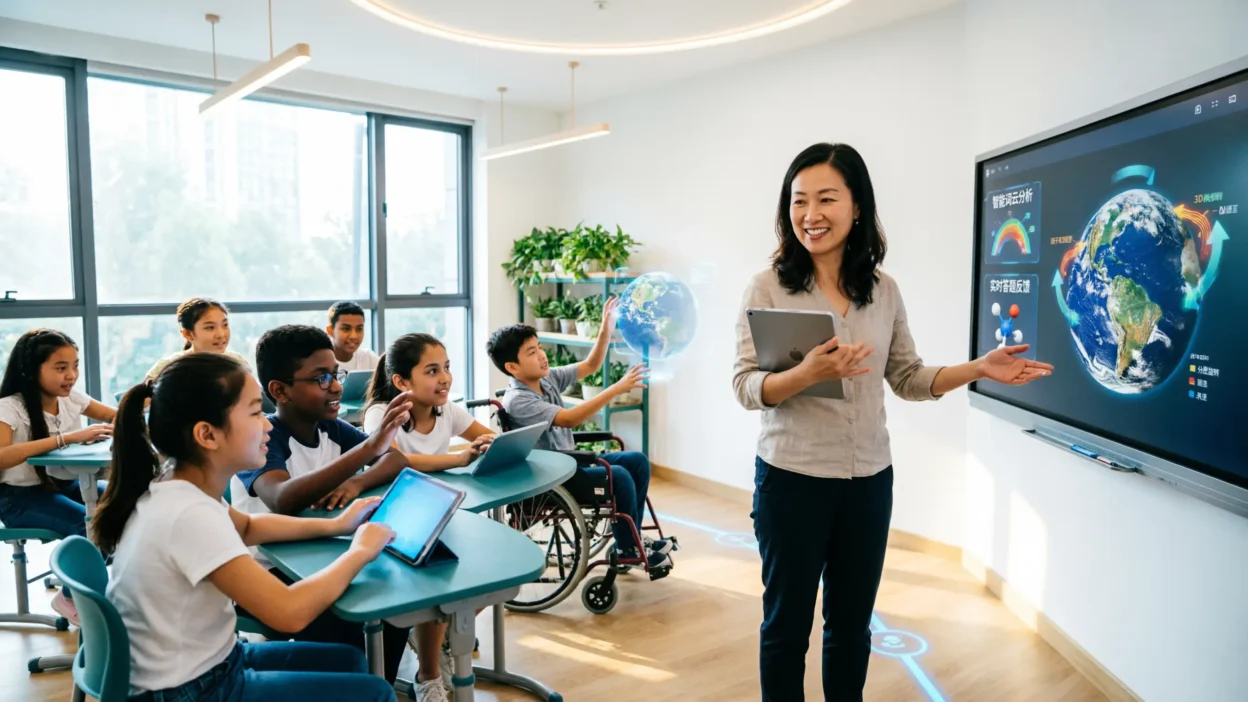
In today’s classrooms, technology is no longer a supplementary aid it’s becoming the backbone of modern teaching. Among these technologies, Artificial Intelligence Tools for Teachers are taking center stage.
From AI Lesson Planning to AI-powered 3D model generation, educators are discovering ways to streamline their workload while providing richer, more personalized learning experiences for students.
AI is transforming classrooms in ways that were once only imagined in science fiction. It allows teachers to create adaptive lessons, generate interactive content, and offer personalized support to every student.
In this article, we’ll explore the best AI Tools for Classroom use, their practical applications, and how they can reshape education for the better.
How AI is Changing the Classroom
Classrooms have evolved from traditional chalk-and-board setups to AI-powered learning environments. AI in Education now allows teachers to focus on higher-order tasks while automating repetitive work like grading, lesson generation, and assessment tracking.
Key Benefits of AI in Education
- Personalized Learning: AI analyzes student performance and tailors lessons to individual needs.
- Enhanced Engagement: Interactive quizzes, games, and multimedia content maintain attention.
- Formative Assessment: Teachers receive real-time feedback on student understanding.
- Inclusive Teaching: AI can support ESL/EFL learners, special education students, and multilingual classrooms.
- Efficiency: Automates administrative tasks, giving teachers more time for direct instruction.
| Traditional Classroom | AI-Enhanced Classroom |
|---|---|
| One-size-fits-all lessons | Personalized learning paths |
| Manual grading | Automated assessments with instant feedback |
| Limited student engagement | Interactive, gamified learning |
| Static content | Dynamic, AI-generated content |
| Time-intensive lesson planning | AI-powered lesson planners streamline preparation |
AI for Lesson Planning
Planning lessons can be time-consuming. AI-powered Lesson Planners like Eduaide, Twee, Diffit, and Magicschool revolutionize this process by automating content creation while ensuring curriculum alignment.
Features of AI Lesson Planning Tools
- Automated Lesson Generation: Input a topic, and the AI creates a complete lesson plan with objectives, activities, and assessments.
- CEFR-Level Adjustments: Ideal for ESL/EFL teachers, AI adapts content to students’ proficiency.
- Differentiated Instruction: Generates multiple versions of the lesson for diverse learning abilities.
- Resource Suggestions: Offers relevant multimedia, reading materials, and exercises.
Example Workflow:
- Teacher enters the topic: Photosynthesis
- AI generates objectives, warm-up activities, main lesson content, and assessments.
- AI recommends interactive slides and quizzes for engagement.
- Teacher reviews, customizes, and deploys the lesson.
Why it matters: Teachers save hours per week while improving student engagement and personalized learning outcomes.
Top AI Tools for Presentations
- Genially – Interactive slide decks with polls, videos, and animations.
- Curipod – AI-generated slides that adapt to lesson objectives.
- Gamma – Generates dynamic, visually appealing content with AI suggestions.
Benefits
- Real-time student participation tracking.
- Integration of multimodal interactions (text, image, and voice).
- Customizable content for inclusive and student-centered design.
AI-Powered Quizzes, Games, and Gamification
Gamification in Education boosts motivation and retention. AI tools generate quizzes, flashcards, and educational games, making learning more interactive.
Recommended Tools
- Quizgecko – AI-generated quizzes with automatic grading.
- Yippity – Adaptive flashcards and games for vocabulary and grammar.
Advantages of AI in Assessment
- Instant feedback for students.
- Personalized quiz content based on performance.
- Supports differentiated instruction for varying abilities.
Example Table – AI Quiz Benefits
| Feature | Traditional | AI-Enhanced |
|---|---|---|
| Question creation | Manual | Auto-generated |
| Feedback | Delayed | Immediate |
| Adaptability | Limited | Personalized |
| Student engagement | Low | High |
Using AI-driven quizzes and games, teachers can focus on guiding critical thinking rather than just content delivery.
3D Model Generators and Multimedia AI Tools
Visualizing complex concepts is easier with AI-powered 3D Model Generators for Education. These tools turn images and videos into interactive 3D models, enhancing STEM, art, and history lessons.
Recommended Tools
- Meshy – Converts 2D images into 3D models.
- Luma AI – Transforms videos into immersive 3D experiences.
Applications in Education
- Science labs: Explore molecules or biological processes virtually.
- History classes: Reconstruct historical landmarks in 3D.
- Design & architecture: Rapid prototyping for projects.
Example Use Case: Students studying human anatomy can manipulate a 3D heart model, zooming in on chambers, arteries, and valves—something textbooks can’t provide.
AI Language Models for Teachers
Language Models for Teachers, like ChatGPT, Claude, Gemini, and DeepSeek, are transforming how teachers generate content and communicate with students.
Practical Uses
- Content Creation: Essays, lesson materials, and reading exercises.
- Multilingual Support: Translate lessons or generate content for ESL/EFL students.
- Grammar and Vocabulary Checks: Instant suggestions to improve student writing.
- Conversational AI: Act as virtual tutors or assistants for students.
Example Scenario: A teacher asks ChatGPT to generate a 10-minute lesson plan on climate change, including discussion questions, a vocabulary list, and a short quiz—done in seconds.
Benefits
- Saves teachers hours in preparation.
- Supports personalized learning.
- Enhances engagement with AI-driven conversation practice.
AI Classroom Assistants
AI-powered Classroom Assistants act as virtual co-teachers, helping students individually while reducing teacher workload.
Tools and Features
- Character.ai – Personalized chatbots for tutoring.
- Open-source AI assistants – Customizable bots for student Q&A.
Capabilities:
- Real-time feedback on assignments.
- Answering frequently asked questions.
- Adaptive instruction based on student responses.
Technical Considerations for Teachers Using AI
Before integrating AI, educators should understand key operational aspects:
| Feature | Considerations |
|---|---|
| Subscription Models | Free, Pro, or Premium; check limits and credits |
| Online vs Offline | Some tools require constant internet; others support offline work |
| Integration | Compatibility with Google Classroom, LMS, or PDF exports |
| Data Privacy | Ensure student data protection and compliance with laws |
| Bias and Accuracy | AI outputs should be reviewed to avoid errors |
| Hosting Options | Cloud-based vs local hosting vs open-source solutions |
Being aware of these factors ensures smooth and responsible adoption of AI in classrooms.
Best Practices for Using AI in Education
- Blend AI with Human Guidance: AI should augment teaching, not replace it.
- Encourage Critical Thinking: Challenge students to question AI-generated content.
- Maintain Inclusivity: Ensure AI tools cater to all learners, including ESL/EFL and special education.
- Track Student Progress: Use AI feedback for formative assessment, but validate it with teacher insights.
- Experiment and Adapt: Try multiple tools to see what works best for your classroom.
Future of AI in Teaching
AI in education is evolving rapidly. Emerging trends include:
- Multimodal AI: Combining text, voice, and visuals for interactive learning.
- Personalized Virtual Characters: AI avatars for tutoring and engagement.
- Adaptive Assessments: Real-time test adjustments based on performance.
- Interactive Simulations: Virtual labs and historical recreations.
The potential is limitless, but teachers must balance innovation with ethics and student-centered design.
Conclusion
Artificial Intelligence Tools for Teachers are no longer a futuristic concept they are here, transforming education today.
From AI Lesson Planning to AI-powered 3D models, these tools enhance engagement, efficiency, and personalization.
By leveraging AI in Education, teachers can reduce administrative burdens while focusing on what truly matters: guiding and inspiring students.
Discover More Post
- AI House Exterior Design: Create Modern Facades in Seconds?
- Character AI List: Top AI Characters You Can Chat With in 2026v
- AI Pixar: The Future of Animated Storytelling(2026)?

Joan Didion is a passionate writer at DreamMaening.com, exploring the hidden meanings behind dreams, symbols, and life’s mysteries with clarity and insight.