
Dogs, just like humans, can suffer from allergies that cause itching, redness, hives, and discomfort.
One common solution for mild to moderate allergic reactions is Zyrtec, a safe antihistamine when used correctly.
Zyrtec, also known by its generic name cetirizine, works by blocking histamine, a chemical responsible for allergy symptoms, helping your dog feel more comfortable.
However, giving the wrong dose can lead to side effects or reduced effectiveness, which is why dosing by weight is critical.
This guide is designed to help pet owners understand the proper Zyrtec dosage for dogs of all sizes, explain how to administer it safely, highlight possible side effects, and explore alternatives.
Whether your dog suffers from seasonal allergies, environmental irritants, or itchy skin, knowing the correct Zyrtec dose ensures relief while keeping your furry friend safe and healthy.
What is Zyrtec and How Does it Work in Dogs?
Zyrtec, or cetirizine, is an over-the-counter antihistamine commonly used to treat allergies in both humans and dogs. In dogs, it works by blocking histamine receptors, the chemical responsible for triggering allergy symptoms such as itching, swelling, hives, and watery eyes. By preventing histamine from binding to these receptors, Zyrtec helps reduce inflammation and discomfort, allowing your dog to feel calmer and more comfortable.
Unlike some other allergy medications, Zyrtec is known for being relatively non-drowsy, although some dogs may still experience mild sedation. It is often compared to other antihistamines like Benadryl (diphenhydramine) or Claritin (loratadine), but Zyrtec has the advantage of fewer side effects in many dogs and is considered safer for daily use under veterinary guidance.
Veterinarians may recommend Zyrtec for dogs suffering from seasonal allergies, environmental irritants, insect bites, or mild skin conditions. However, it’s important to note that Zyrtec is not a cure—it simply manages symptoms, helping your dog live more comfortably while underlying causes are addressed. Proper dosing by weight is essential to ensure both safety and effectiveness.
Common Uses of Zyrtec in Dogs
Zyrtec is most commonly used in dogs to manage allergic reactions. Just like humans, dogs can develop allergies to a wide variety of triggers, including pollen, dust, mold, certain foods, and insect bites. These allergic reactions often manifest as itching, redness, swelling, hives, or even mild respiratory issues. Administering Zyrtec can help relieve these uncomfortable symptoms, improving your dog’s overall quality of life.
One of the most frequent reasons veterinarians recommend Zyrtec is seasonal allergies, such as reactions to grass, trees, or ragweed. Dogs may scratch excessively, lick their paws, or develop inflamed skin during allergy seasons. Zyrtec works by reducing the histamine response, helping to calm the skin and prevent further irritation.
Zyrtec is also useful for minor skin irritations and hives, especially those caused by insect bites. While it’s not a substitute for veterinary treatment in severe cases, it can provide temporary relief until a vet can assess your dog.
Additionally, some dogs suffer from chronic environmental allergies, such as dust mites or mold in the home. In these cases, Zyrtec may be used regularly to manage symptoms, always under veterinary supervision.
It’s important to remember that while Zyrtec alleviates allergy symptoms, it does not address the root cause. Identifying triggers, maintaining a clean environment, and following your vet’s advice are essential for long-term allergy management.
Zyrtec Dose for Dogs by Weight
Determining the correct Zyrtec dose for dogs is crucial for both safety and effectiveness. Unlike humans, dogs’ metabolisms vary widely depending on their size, breed, and overall health. That’s why dosing based on weight is always recommended rather than giving a standard amount to all dogs.
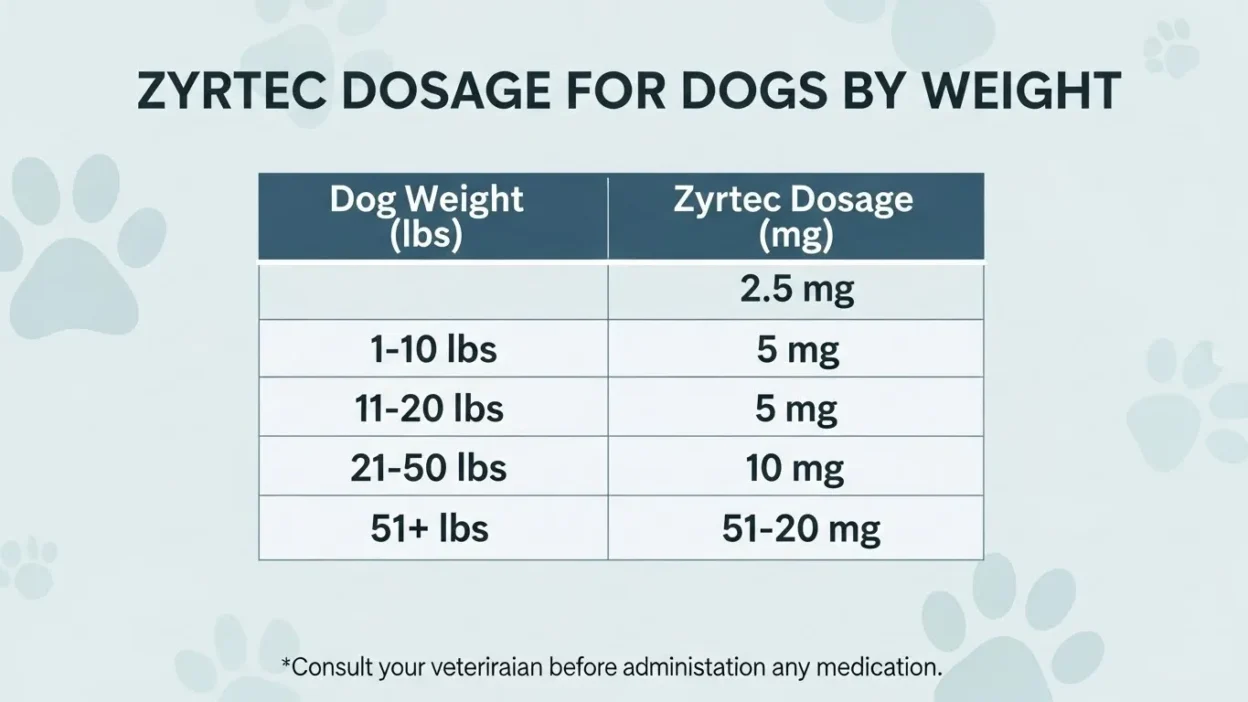
The general guideline for Zyrtec in dogs is 0.5 to 1 mg of cetirizine per kilogram of body weight, given once daily. For example, a small dog weighing 10 pounds (approximately 4.5 kg) would typically require around 2 to 4.5 mg, whereas a larger dog weighing 50 pounds (about 22.7 kg) could need 11 to 23 mg. Zyrtec is available in 10 mg tablets, which can be split for smaller dogs, or in liquid formulations, which allow for more precise dosing, especially for puppies or very small breeds.
Here’s a simple weight-based reference for dogs:
- Up to 10 lbs (4.5 kg): 2–4 mg
- 10–20 lbs (4.5–9 kg): 4–8 mg
- 20–40 lbs (9–18 kg): 9–18 mg
- 40–60 lbs (18–27 kg): 18–23 mg
- 60–80 lbs (27–36 kg): 23–30 mg
- 80+ lbs (36 kg+): 30 mg or as advised by a vet
It’s important to note that some dogs may require adjustments based on age, health conditions, or sensitivity to medication. Puppies, senior dogs, or dogs with kidney or liver issues should always have dosing confirmed by a veterinarian.
Never give Zyrtec formulations containing xylitol or other harmful additives, which are toxic to dogs. Following the correct dose by weight ensures your dog receives relief from allergy symptoms safely and reduces the risk of side effects like drowsiness or gastrointestinal upset.
How to Administer Zyrtec to Dogs Safely
Administering Zyrtec correctly is just as important as giving the right dose. The medication is available in tablet and liquid forms, which makes it easier to give to dogs of all sizes. Tablets can be hidden in a piece of food or a treat, while liquid Zyrtec allows precise dosing for smaller dogs or puppies. Always use a veterinarian-approved syringe or dropper to ensure accuracy when giving the liquid form.
It is essential to avoid human Zyrtec syrups that contain flavorings or additives like xylitol, which is toxic to dogs. Stick to plain tablets or veterinary-approved liquid formulations to keep your dog safe.
The typical frequency for Zyrtec is once daily, although in some cases, a veterinarian may recommend splitting the dose for better symptom control. Always follow your vet’s instructions rather than assuming a higher dose will work faster. Giving more than the recommended dose can lead to drowsiness, vomiting, or other adverse reactions.
Monitor your dog for any changes in behavior or health after giving Zyrtec. Mild drowsiness is common, but excessive lethargy, rapid breathing, or vomiting should prompt an immediate call to the veterinarian.
Consistency is key: try to give Zyrtec at the same time each day, preferably with food to reduce the risk of stomach upset. Also, record doses in a medication log, especially if your dog is taking other medications, to avoid accidental overdosage.
Proper administration ensures that Zyrtec provides maximum allergy relief safely while minimizing the risk of side effects, making it an effective tool in managing your dog’s allergies.
Side Effects of Zyrtec in Dogs
While Zyrtec (cetirizine) is generally considered safe for dogs, it can cause side effects in some pets. Understanding what to expect helps you monitor your dog and respond quickly if any issues arise. The most common side effect is mild drowsiness. Some dogs may appear slightly sleepy after taking Zyrtec, especially if they are sensitive to antihistamines. This is usually temporary and not harmful.
Other minor side effects include dry mouth, mild vomiting, diarrhea, or decreased appetite. These reactions are typically mild and resolve on their own within a few doses. However, you should always observe your dog closely during the first few days of treatment.
In rare cases, more serious reactions can occur, such as lethargy, rapid heartbeat, agitation, or severe gastrointestinal upset. If these symptoms appear, stop giving the medication immediately and contact your veterinarian. Overdose, although uncommon, can be dangerous and may require urgent medical attention.
Dogs with pre-existing liver or kidney conditions may be more prone to side effects because these organs process the medication. Puppies and senior dogs should receive doses specifically adjusted by a veterinarian to reduce risk.
It’s important to remember that side effects are dose-dependent. Following the correct weight-based dosing guidelines minimizes the likelihood of adverse reactions. Monitoring your dog during treatment ensures that Zyrtec provides relief safely, keeping your furry friend comfortable without compromising their health.
Precautions and Contraindications
Before giving Zyrtec to your dog, it’s important to understand precautions and contraindications to ensure safety. While Zyrtec is generally safe, certain dogs require extra care or alternative treatments. Dogs with kidney or liver problems are particularly sensitive, as these organs metabolize and eliminate the drug. Giving a standard dose to a dog with organ issues could lead to a buildup of medication in the body, increasing the risk of side effects. Always consult a veterinarian for adjusted dosing in these cases.
Puppies, senior dogs, and dogs with chronic health conditions also need careful monitoring. Puppies may be more sensitive to medications, while older dogs might have underlying conditions that affect how their bodies handle Zyrtec. A vet can recommend the safest dose and frequency for these dogs.
It’s also crucial to consider drug interactions. Zyrtec can interact with other medications, such as sedatives, other antihistamines, or medications that affect the liver or kidneys. Never combine Zyrtec with other drugs without veterinary guidance.
Another important precaution is avoiding human formulations containing xylitol or other toxic additives. Only use plain tablets or veterinary-approved liquid formulations.
Lastly, while Zyrtec is helpful for allergy management, it does not replace veterinary care for serious conditions like infections, severe reactions, or chronic dermatitis. Always seek professional advice if symptoms persist or worsen. Following these precautions ensures your dog receives safe, effective allergy relief while minimizing risks.
Alternatives to Zyrtec for Dog Allergies
While Zyrtec is effective for many dogs, some pets may require alternative treatments due to sensitivity, underlying health conditions, or insufficient relief. One common option is other over-the-counter antihistamines, such as Benadryl (diphenhydramine) or Claritin (loratadine). Benadryl is widely used and has a long history of safety in dogs, but it often causes more drowsiness than Zyrtec. Claritin can be effective for dogs with mild allergies, though dosing should always be confirmed with a veterinarian.
For dogs with more severe or chronic allergies, veterinarians may prescribe specialized medications like steroids, Apoquel, or Cytopoint. These drugs are designed to control itching, inflammation, and allergic reactions more aggressively. Steroids work quickly but are usually reserved for short-term use due to potential long-term side effects. Apoquel and Cytopoint offer targeted allergy relief and are generally safe for long-term use under veterinary supervision.
Non-medication approaches can also help manage allergies. Hypoallergenic diets or food trials may reduce reactions caused by certain proteins, while environmental control, such as frequent cleaning, air filters, and limiting outdoor exposure during high pollen seasons, can minimize symptoms. Supplements like omega-3 fatty acids may also support healthy skin and reduce inflammation.
Ultimately, the best alternative depends on your dog’s age, health, allergy severity, and response to treatment. Consulting a veterinarian ensures the safest and most effective approach, whether it involves Zyrtec, another medication, or lifestyle adjustments. Combining these strategies often provides the most relief for dogs suffering from allergies.
Frequently Asked Questions (FAQ)
Many pet owners have questions about giving Zyrtec to their dogs. Understanding the answers helps ensure safe and effective allergy management.
1. Can puppies take Zyrtec?
Yes, puppies can take Zyrtec, but dosing must be carefully calculated based on weight and age. Young puppies are more sensitive to medications, so a veterinarian should determine the safest dose and form, especially for very small breeds.
2. How long does Zyrtec take to work in dogs?
Most dogs show improvement within 1 to 3 hours after taking Zyrtec, though some cases may take a few days for full relief. Consistent daily dosing, as recommended by a veterinarian, often produces the best results.
3. Is Zyrtec safe for senior dogs?
Zyrtec is generally safe for older dogs, but caution is needed for pets with kidney, liver, or heart issues. A veterinarian may adjust the dose or monitor the dog for side effects such as drowsiness or gastrointestinal upset.
4. Can I give my dog human Zyrtec syrup?
No. Human liquid Zyrtec may contain xylitol or flavorings that are toxic to dogs. Only use plain tablets or veterinary-approved liquid formulations.
5. Can Zyrtec be given long-term?
Long-term use is possible under veterinary supervision, especially for chronic allergies. Regular check-ups are recommended to monitor for any side effects or changes in health.
6. What should I do if my dog misses a dose?
Give the missed dose as soon as you remember, but never double up to make up for a missed dose. Consistent daily dosing is key for controlling symptoms.
These FAQs address the most common concerns and help dog owners use Zyrtec safely, effectively, and confidently, ensuring their pets get the relief they need without unnecessary risk.
Conclusion
Zyrtec (cetirizine) is a safe and effective option for managing allergies in dogs when used correctly. By blocking histamine, it can relieve itching, hives, redness, and other allergy symptoms, helping your furry friend feel more comfortable and active. However, the key to its safe and effective use lies in accurate dosing based on your dog’s weight. Small mistakes in dosage can lead to side effects such as drowsiness, vomiting, or, in rare cases, more serious complications. Following weight-based guidelines and consulting a veterinarian ensures that your dog receives the proper relief without compromising their health.
In addition to dosing, proper administration techniques are critical. Whether using tablets or liquid formulations, make sure the medication is given safely, avoiding any products that contain harmful additives like xylitol. Monitoring your dog for side effects and maintaining consistent daily dosing also helps maximize Zyrtec’s effectiveness.
While Zyrtec is helpful, it is not a cure for allergies. Identifying triggers, managing the environment, and considering alternatives or supplements can provide long-term support for dogs with chronic allergies. Ultimately, working closely with a veterinarian will ensure the best plan tailored to your dog’s age, weight, and health.
By understanding how Zyrtec works, proper dosing, administration, side effects, and alternatives, you can confidently use this medication to improve your dog’s quality of life, keeping them comfortable, happy, and healthy. Proper allergy management today can prevent complications tomorrow, allowing your dog to enjoy every season without unnecessary discomfort.

Elizabeth Gilbert is a celebrated American author known for exploring self-discovery, spirituality, and life’s deeper meanings. Her writings inspire readers to uncover the hidden messages in dreams, symbols, and personal journeys—perfectly aligning with the mission of DreamMaening.com.